Building the Office of the CEO - The Business Case and Build Guide
The highest-leverage function in any organization is the one most often built by accident. This is a practitioner's guide to building it deliberately.
Executive Summary
The Office of the CEO is the highest-leverage function in any organization, and the one most consistently built by accident rather than design. This paper is a practitioner’s guide to building it deliberately, or to diagnosing and improving the function you already have.
The argument is simple. A CEO’s time, attention, and decision-making capacity are finite, and in many firms they are being eroded by work the CEO should not be doing. The Office of the CEO exists to remove that erosion. When it is built well, the CEO decides faster, misses less, and operates with an authority that poorly supported peers cannot match. When it is built badly, the firm pays senior compensation for a function that returns friction.
Every Office of the CEO, whatever its scale, does three kinds of work: decisions, readiness, and narrative. The strongest functions assign clear ownership of each, place a single integrating figure, usually a senior Chief of Staff, at the center to govern the flow of decisions and escalations, and preserve a direct line between the readiness layer and the principal at all times. This paper sets out that model in full, along with the roles that populate it, the configurations we see across public companies, financial services, and founder-led firms, and the failure modes that cost firms years and considerable expense to learn firsthand.
The function scales to the principal. At one end sits the public company build: multiple Executive Assistants covering time zones, a Chief of Staff, communications leadership, analysts, and junior support, with salary costs that can exceed $5 million per year. At the other sits a founder and one exceptional hire. The design questions are the same at every scale. Only the budget and the stakes change.
One question determines whether any of this applies to you: is work still reaching you that should have been resolved before it got there? If that is the pattern rather than the exception, the pages that follow explain why, and what to do about it.
Foreword
We have spent more than a decade placing Executive Assistants, Chiefs of Staff, and the wider roles that surround senior principals: in public technology companies, private equity firms, hedge funds, global banks, family offices, and founder-led businesses. Across that time, one pattern has repeated itself. Firms that are rigorous about everything else, capital allocation, risk, hiring into revenue roles, treat the construction of the CEO’s immediate support function as something that will sort itself out.
It rarely does. What emerges instead is a function that accumulated over years of reactive hiring. An EA brought in to manage a calendar, then promoted to absorb more. A Chief of Staff created when the CEO finally conceded that the existing setup was no longer enough. Each hire reasonable in isolation, and the whole never designed.
To be clear, many of these functions end up excellent. Some of the strongest teams we have worked with took years and several rounds of hiring before they clicked. The issue is what each of those rounds cost: search fees, onboarding time, and months of degraded support at the exact point in the firm where degraded support is most expensive. Iteration is the normal route to a great Office of the CEO. It is also the expensive one.
This paper exists to shorten the route. It is written from real mandates, real conversations with principals and their teams, and real mistakes, including the ones that only become visible once you know what to look for. Whether you are building this function from scratch, adding to one, or stress-testing what you already have, the intent is the same: that you finish with a clear view of what a well-built Office of the CEO looks like, where yours stands against it, and what to do next.
What the Office of the CEO Actually Is
The Office of the CEO is the group of roles whose job is to multiply the effectiveness of the principal at the center of it. Executive Assistants, Chiefs of Staff, communications leads, analysts, and junior support staff, arranged so that the CEO’s time goes to the work only the CEO can do.
That definition matters because the label misleads people. “Office of the CEO” sounds like something that belongs to a Fortune 100 company with a headquarters floor to match. The full version does exist at that scale: multiple Executive Assistants covering different time zones, a senior Chief of Staff, embedded communications, dedicated analysts, and junior admin support beneath them, with salary costs alone that can exceed $5 million per year. But the function is not defined by headcount. A founder and one exceptional Chief of Staff is an Office of the CEO. A private equity managing partner with a Chief of Staff and two Executive Assistants is an Office of the CEO. The design questions are identical at every scale. Who owns the CEO’s time. Who owns the flow of information toward decisions. Who owns how the CEO shows up to the people who matter. Only the budget and the stakes change.
Nor is the function exclusive to CEOs. The same structure, at varying scale, surrounds CIOs and CTOs at large firms, rainmakers in banking and law, and founders whose companies have outgrown their calendars. Throughout this paper we use “CEO” and “principal” interchangeably, because the design logic does not change with the title on the door.
The honest test of whether you need this function, or need to improve the one you have, is a single question. Are you doing less of the work only you can do? Every hour a principal spends processing raw information, coordinating logistics, chasing follow-ups, or managing down into their own support structure is an hour taken from the work that actually moves revenue, shareholder value, or the relationships the firm depends on. If the answer to that question is yes, the function is either missing or misbuilt. The rest of this paper deals with both cases.
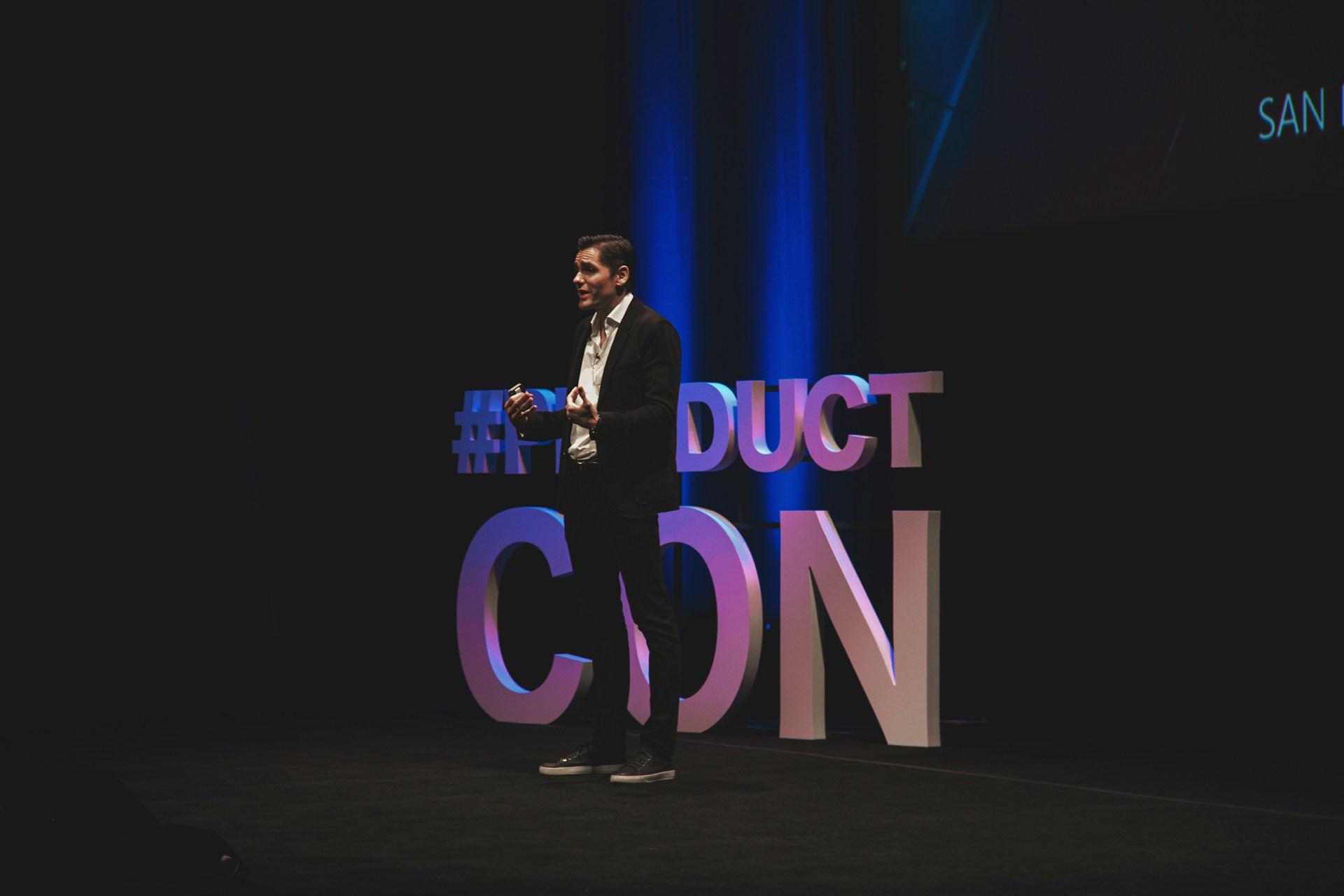
Everyone sees this moment. Nobody sees the months of work that made it possible.
The Layers of the OCEO
.jpeg)
Every Office of the CEO, whatever its scale, does three kinds of work: decisions, readiness, and narrative. The best-built functions assign clear ownership of each. Getting there is rarely straightforward. Many of the strongest teams we have encountered took years and several rounds of hiring to click, with each miss carrying its own cost in fees, onboarding time, and disruption at the center of the firm. The layers described below are the destination. Understanding them at the outset is what shortens the journey.
The decision layer
The decision layer moves information toward a decision, and moves that decision back out into the business. Board packs, escalations from function heads, informal intelligence, and external signals flow in. Someone synthesizes them into a form the CEO can act on quickly. The decision gets made, escalated, or delayed, and the outcome leaves the room with an owner, a budget, and a deadline attached.
When this layer works, the CEO spends their time deciding. When it fails, they spend it processing information that should have reached them in a decision-ready state. A CEO working through raw board materials line by line is not being diligent. They are absorbing a cost the function was built to remove.
The decision layer is staffed, depending on scale, by analysts, the Chief of Staff, and members of the C-suite who feed into it. Its output side matters as much as its input side. A decision that leaves the CEO’s office without an owner and a deadline is not a decision. It is a comment, and the business will treat it as one.
The readiness layer
The readiness layer owns the who, what, where, and when of the CEO’s world. Calendar, travel, briefing, preparation, logistics, and the coordination that connects them. In a complex environment this is anything but simple. A CEO operating across two continents, a board cycle, an earnings calendar, and a live transaction generates a volume of moving parts that will consume the principal’s own attention unless someone else holds all of it.
Readiness is the domain of Executive Assistants, and at the senior end of the market it is a domain of genuine sophistication. The best operators in these seats think several moves ahead. They ensure the CEO walks into every room prepared, briefed, and on time, and they do it without the CEO ever seeing the machinery. The measure of a strong readiness layer is silence. Nothing surfaces to the principal except the things that need to.
A common and costly mistake is to treat readiness as the junior layer. It is the foundation. A brilliant decision layer sitting on top of a weak readiness layer produces a CEO who is intellectually well served and operationally exposed, double-booked, under-briefed, and losing credibility in increments with every visible slip.
One structural rule is non-negotiable: the readiness layer must have direct access to the CEO at all times. Not routed through the Chief of Staff, the CAO, or anyone else. The people managing the principal’s calendar, travel, and preparation cannot do their job through an intermediary, and any structure that inserts one adds latency exactly where the function can least afford it.
Readiness is also more than logistics. It is where strategy gets enabled or quietly obstructed, because the calendar is where strategic intent either receives time or does not. For that reason the Chief of Staff should be looped into the readiness layer continuously, and all three layers should operate in close and constant contact. Any disconnect between them converts directly into friction and duplicated work, and it surfaces first, and most visibly, at readiness.
The narrative layer
The narrative layer owns the story the CEO is telling, internally and externally. Internally: how strategy, performance, and change are framed to the organization. Externally: investor communications, media positioning, and the CEO’s presence in the markets and forums where the firm’s reputation is formed.
This is the layer firms build last, and often only after a crisis makes its absence visible. A clumsy earnings narrative, an investigative piece, a senior departure handled badly. In financial services and public markets, where confidence is a real input to performance, narrative is not a communications nicety. It is an asset, and like any asset it can be managed or neglected.
At full scale this layer is a dedicated communications professional or team, embedded in the Office or working in close partnership with it. At smaller scale it is a defined part of the Chief of Staff’s remit. What matters is that it is owned by someone, because the alternative is that the story gets written by whoever else is talking.
The Head of Context and Alignment
Sitting across all three layers is the most important structural decision in the function: the integrating figure between the Office and the CEO. We call this the Head of Context and Alignment. It is a function, and deliberately so. On the org chart, the person holding it is usually a senior Chief of Staff, sometimes a Chief Administrative Officer, and occasionally an Executive Assistant who has grown well past the conventional boundaries of the title.
This person holds the full context of the CEO’s world: what is in motion, what is at risk, what the CEO actually meant in the meeting as opposed to what the room heard. They resolve the day-to-day questions of the wider Office without principal involvement, and they ensure that only the matters genuinely requiring the CEO’s judgment reach the CEO’s desk. Everything else gets handled at their level or below. The integrating role governs the flow of decisions and escalations. It does not sit between the readiness layer and the principal, for the reasons set out above. Both channels run in parallel, and both are essential.
The alternative model, in which the CEO is the direct reporting point for four or five high-frequency functions, is manageable in a small team and dysfunctional in a large one. It makes the principal the bottleneck in the structure that exists to remove bottlenecks. For CEOs with long-standing personal relationships across their support team, introducing an integrating layer can feel like distance. In practice it is the opposite. It is what preserves the CEO’s attention for the decisions only they can make, which is the entire point of the function.
The Roles, and the Ambiguity Problem
Before a firm can hire well into this function, it needs to confront an uncomfortable feature of the market: the titles mean almost nothing on their own.
An Executive Assistant can be someone earning $60,000 managing a shared team calendar, or someone earning $500,000 supporting a public company CEO through earnings cycles, board meetings, and a travel schedule that changes by the hour. A Chief of Staff can be a $150,000 hire from an administrative background whose real role is senior support with a better title, or a $500,000+ operator with an MBA and years inside the business, functioning as the CEO’s genuine second brain. Same titles. Unrecognizably different roles.
This ambiguity is where most hiring failures begin. A vague brief attracts the wrong range of candidates, interviewers assess against the wrong benchmark, and the firm ends up with a capable person in an impossible seat. Precision in scoping is not an administrative nicety at this level. It is the difference between a hire that compounds and a hire that has to be undone.
Scoping also protects the function after the hire is made. Hire people to own specific roles, and be explicit about that ownership from the first conversation. Where scope is left loose, overstepping follows, and each act of overstepping dilutes someone’s original focus. When that dilution happens at the readiness layer, it becomes visible fastest, because readiness failures are the ones the principal experiences directly.
The Executive Assistant
The Executive Assistant owns the readiness layer. At the senior end of the market, the role bears little resemblance to its junior namesake. A senior EA supporting a principal at a public company or a major fund is coordinating across time zones, managing a schedule driven by markets and board cycles, holding comprehensive context on everything in motion, and building the external relationships, counterpart EAs, portfolio company teams, travel and hospitality networks, that let them solve problems before the principal knows they exist.
What separates exceptional from competent at this level is judgment. Knowing when to act independently, when to surface something, and when to absorb an issue entirely. That judgment is built through years in demanding environments, and it is the thing firms should be hiring for. Technical skill is table stakes.
One profile deserves specific attention: the EA who operates at what we call the Chief of Staff threshold. These are Executive Assistants with the commercial understanding and organizational reach to run projects, represent the principal in rooms of consequence, and carry work that would sit with a Chief of Staff in other structures, while still owning readiness. They are rare, they are expensive, and in certain configurations, covered later in this paper, they are precisely the right answer.
The Chief of Staff
The Chief of Staff is the most misunderstood and most frequently mis-hired role in the entire function. At its best, the role is a cognitive extension of the CEO: shadowing their thinking, translating intent into action across the business, and holding the threads of initiatives the CEO cannot personally supervise. At its worst, it is an expensive title wrapped around a logistics role that an excellent EA would perform better.
Two distinct models exist, and firms should choose deliberately between them.
The right hand. A long-tenure Chief of Staff who builds deep context over years and becomes the standing integrating figure described in the previous section. These profiles rarely come up through administrative careers. They come from inside the CEO’s world: former analysts, consultants, operators from other business units, people who chose proximity to principal-level decision-making over a conventional track. They support on earnings, board preparation, and internal strategy, connect the dots across the business on the CEO’s behalf, and manage high-value external and government relationships. Their value compounds with tenure, because their real asset is accumulated context.
The talent rotation. A high-potential operator placed in the seat for eighteen months to two years, then deployed onward into the business. Large technology companies run this model well, and its benefits are real: it accelerates exceptional people, seeds the wider organization with executives who understand how the CEO thinks, and keeps fresh perspective flowing through the Office.
It also carries a structural cost that firms consistently underweight. Every rotation reopens the gap between the CEO and the function. Context walks out the door on a schedule, and the Office absorbs the tax of offboarding and onboarding a new Chief of Staff every couple of years, at the most sensitive interface in the firm. Firms running rotation models need a deliberate answer for where continuity lives. Often the right answer is the threshold EA described above: a senior Executive Assistant sophisticated enough to bridge into Chief of Staff territory and hold the standing context across rotations, without losing ownership of readiness. In that configuration, a second Chief of Staff is usually unnecessary. The design principle is worth stating plainly: rotation in the CoS seat raises, rather than lowers, the required caliber of the EA beside it.
The Analyst
In larger and more complex environments, a dedicated analyst function, one person or a small team, provides the processing capacity that lets the CEO decide at pace. Their work sits upstream in the decision layer: market scanning, competitive intelligence, briefing preparation, and the synthesis of management information into formats built for rapid consumption.
Good analysts in this seat succeed by prevention, which is why their value is easy to miss. The CEO who walks into a critical investor meeting with a briefing that anticipated the questions is operating at a different level than the one reading materials in the car. The analyst wrote that difference.
Communications
The narrative layer needs an owner, and at scale that owner is a dedicated communications professional with genuine proximity to the principal. Not an external agency on retainer, but someone with the trust and context to function as a strategic partner: shaping investor communications, advising on how public statements will land, managing the CEO’s presence in the market, and protecting the principal from the standard communications errors, the reactive response, the off-the-record comment, the announcement that is accurate and damaging at the same time.
Junior support
Beneath these roles, larger functions carry junior administrative staff: team assistants, coordinators, and back-up EA coverage. These seats matter more than their seniority suggests, because they are where readiness capacity gets built and where future senior EAs develop. A function with no junior layer has no bench, and a function with no bench has a single point of failure at every desk
Reading the CEO’s Context
There is no correct Office of the CEO in the abstract. There is only the correct Office for a specific principal, in a specific firm, at a specific moment. Before any role is scoped, the builders of this function need an honest read of the world it will operate in. Six dimensions do most of the work.
Internal versus external weighting. A CEO whose center of gravity is internal, running operations, driving transformation, managing a leadership team, needs a function tilted toward the decision layer and internal coordination. A CEO whose value is created externally, with investors, clients, regulators, and counterparties, needs a heavier readiness and narrative build. Most principals are some blend, and the blend shifts over time. The function should be weighted to match, and re-weighted when the job changes.
Board and investor obligations. A public company CEO carries an earnings calendar, a disclosure regime, and a board rhythm that together consume a fixed and non-negotiable share of the year. The Office must be built around that skeleton: preparation cycles, materials production, and the narrative discipline that public markets demand. A private company principal has more freedom, and correspondingly more variance in what the function needs to hold.
Public visibility. Some CEOs are the public face of their firm and their sector. For them, the narrative layer is a standing capability. Others are deliberately private, and for them the same layer exists to keep things quiet rather than to project. Both are valid. The function just needs to know which job it has.
Growth versus turnaround. A firm in growth mode needs an Office built for pace: fast decisions, heavy travel, an expanding stakeholder map. A firm in turnaround needs an Office built for control: precision in information flow, careful internal narrative, and absolute discretion. The same roles behave differently in each context, and candidates who thrive in one frequently struggle in the other.
Operating style. Some principals run loud. Large presence, heavy travel, an entourage in motion, decisions made verbally at speed. The people around them need stamina, flexibility, and the temperament to thrive inside that energy. Other principals are reserved, private, and analytical, and their function needs to match that tempo: fewer errors, higher precision, less noise. Neither style is better. But a mismatch between the principal’s tempo and the team’s temperament will surface as friction within months, and it will be misdiagnosed as a capability problem when it is a chemistry problem. Chemistry at this proximity is a hiring criterion, and it should be assessed as rigorously as competence.
The stakes of failure. Finally, an honest accounting of what a mis-hire costs in this specific seat. For a founder with one Chief of Staff, a bad hire is painful. For a public company CEO in an earnings year, a hole in the function is a performance variable with a market-facing edge. The higher the stakes, the more the process should look like a senior executive search and the less it should look like an admin hire.
Get these six dimensions right and the specification largely writes itself. Skip them, and the firm ends up hiring an excellent candidate for a role that does not actually exist.
Configurations in the Wild
The model flexes. What follows are the configurations we encounter most often, with an honest account of when each fits. Details have been altered where necessary; the structures are real.
The full public company build
A business unit CEO at a technology company valued in excess of $3 trillion runs the following: three Executive Assistants, one covering Eastern time, one covering Pacific, and a third who provides back-up coverage while acting as primary support to the Chief of Staff. A long-standing, highly technical Chief of Staff who functions as the CEO’s second brain. Embedded communications support. Junior administrative staff beneath.
This is the readiness layer built for a principal whose day genuinely spans the continent, with resilience engineered in. No single departure breaks coverage. The configuration is expensive, and at this scale, correctly so. The total salary cost of a function like this, across EAs, Chief of Staff, communications, analysts, and junior support, can exceed $5 million per year. Set against the enterprise value riding on the principal’s effectiveness, it is one of the cheapest forms of insurance the company buys.
The flat alternative
Nvidia is the well-documented counterexample. The company runs a famously flat structure, and its CEO has spoken publicly about operating without the layers most companies consider standard, including the Chief of Staff seat. The support function there is built instead on Executive Assistants sophisticated enough to cross the Chief of Staff threshold: running projects and programs, covering ground that would elsewhere belong to a CoS, and operating with unusual autonomy.
The lesson is not that Chiefs of Staff are optional. The lesson is that the three layers are the constant and the org chart is the variable. Nvidia still does decisions, readiness, and narrative. It has simply chosen to concentrate ownership in fewer, more capable seats. That choice raises the bar for every hire in the function, which is precisely why it works there and fails in firms that copy the flatness without copying the hiring standard.
The discreet single hire
Some principals conclude that a full function is itself a risk. Too many people close to the center, too much surface area for leaks, too much of their world visible to too many. Their answer is one exceptional hire: a Chief of Staff who is also de facto Executive Assistant, estate manager, and personal assistant. One person, total trust, everything.
This configuration is legitimate and common among ultra-high-net-worth principals and intensely private founders. It should be entered honestly. The person in this seat is well compensated and usually overworked, the role has no bench and no backup, and the principal is accepting concentration risk in exchange for discretion. For the right pairing it is the best seat in the market. It is not a configuration that survives a mediocre hire.
The dealmaker setup
In finance and law, the function frequently surrounds a rainmaker rather than a CEO: a senior partner, a head of desk, a practice leader whose personal relationships generate a material share of the firm’s revenue. The standard build is a Chief of Staff plus one or two Executive Assistants. The CoS handles executive committee coordination, internal outcomes, and the connective work across the firm. The EAs deliver white-glove support on the relationship side: the dinners, the follow-ups, the travel, the hundred small acts of preparation that keep a relationship-driven business moving from one meeting to the next without a dropped thread.
In these environments the readiness layer is not back office. It is adjacent to revenue, because the product being sold is largely the principal’s attention and reliability, and the function manufactures both.
The founder build
At startup and scale-up stage, the Office of the CEO is often the founder plus one. Sometimes that one is a Chief of Staff. Sometimes it is a Founders Associate: junior to a CoS, senior to a conventional EA in commercial scope, and hired as much for trajectory as for current capability. The scoping question at this stage is brutally simple. What is the founder doing that someone else could do, and what is it costing the company that the founder is doing it? The first hire into this function should be aimed directly at the largest answer.
The mini Office of the CEO
Between the founder build and the full public company function sits the configuration relevant to most readers of this paper: the well-funded scale-up, the global private company, the private equity firm, the investment bank, the large law firm. Principals in these environments carry complexity comparable to public company CEOs, with more freedom in how they build against it. The typical answer is a Chief of Staff and one or two Executive Assistants, with narrative owned part-time by the CoS or supported externally, and analyst capacity borrowed from the business when needed.
The considerations are identical to the full build. Only the scope and budget change. And the entry question is the same one from the opening of this paper: is the principal doing less of the work only they can do? Where the answer is yes, and where the recovered time would flow into revenue, enterprise value, or the firm’s highest-stakes relationships, the function pays for itself. That is not a soft claim. It is arithmetic, and we return to it in the economics section.
Feeder Structures and Dotted Lines
At scale, the Office of the CEO does not operate alone. It sits at the center of a wider structure, and how that structure connects is a design decision in its own right.
Sister offices. Large organizations increasingly run parallel functions: an Office of the CIO, an Office of the CTO, equivalents around divisional presidents. Each is a cluster of the same roles, owning outcomes for its own principal, and together they form a network. Where these offices coordinate well, at the Chief of Staff and senior EA level, the whole executive layer moves faster: calendars align, information flows laterally without escalating vertically, and cross-functional work gets sequenced by people who hold context rather than fought over by people who hold titles. Where they operate as silos, every point of coordination becomes a meeting between principals, which is the most expensive possible way to schedule anything.
Standing dotted lines. The primary Office also receives standing connections from the wider C-suite. CFOs, COOs, and Chief Product Officers feed the decision layer directly, and their own support staff coordinate with the CEO’s readiness layer continuously. These lines work when they run through the Head of Context and Alignment, who decides what reaches the principal. They fail when every function head maintains a private channel to the CEO, which recreates the bottleneck the Office exists to remove.
Temporary dotted lines. The most underused structure in this section: the project-based mandate. A COO or Chief of Staff is given ownership of a specific outcome, a transformation program, a market entry, a post-merger integration, and carries the CEO’s explicit blessing across the business for its duration. They report into the Office, borrow its authority, and hand the mandate back when the outcome lands.
Done well, this is how CEOs extend their reach into work they cannot personally supervise without adding permanent structure. Done badly, it produces the familiar failure of the empowered envoy whom nobody believes: authority claimed, never conferred, and quietly ignored. The difference is almost entirely in how visibly and specifically the CEO confers the mandate at the outset. Gravitas is granted in public or it is not granted at all.
Failure Modes
Nearly every underperforming Office of the CEO we have encountered traces back to a small set of recurring failures. Most firms learn them through iteration, one expensive hiring cycle at a time. They can be learned here instead. Each is presented with its symptom, because the diagnosis is only useful if you can detect the condition in your own function.
Title inflation. The Executive Assistant is retitled Chief of Staff without the mandate, exposure, or background the role demands. Or the Chief of Staff holds the title while spending most of their week on logistics. The symptom: expensive people operating below their billing, while the work they were nominally hired for goes undone. The test is to ignore the titles for a week and map what each person actually does. If the map and the org chart disagree, the org chart is lying.
The flex promise. A close relative of title inflation, made during the hiring process rather than after it. A senior EA is hired with a loose suggestion of “flex” in the role, or an outright promise of becoming a Chief of Staff in time. The promise does damage in both directions. Either the hire acts on it and begins overstepping into work that belongs to others, diluting their own focus and someone else’s, or the progression never materializes, the hire concludes they were misled, and they resign. Both outcomes leave the function stressed and scrambling for a replacement at its most sensitive interface. If a genuine progression path exists, define it with criteria and a timeline. If it does not, say so, and hire someone who wants the role as scoped. The symptom: any brief or interview in which “the role can grow with you” is doing the work that a defined scope should be doing.
To be precise about where the line sits, because flex itself is not the failure: whether flex belongs in a role depends entirely on the structure around it. Where a true right-hand Chief of Staff is in post, flex from the EA seat is usually overstepping, because the ground is already owned. Where the Chief of Staff rotates, flex is sometimes required, and the threshold EA described earlier in this paper is the deliberate version of it. Where there is no Chief of Staff at all, flex is often expected, and the EA seat should be scoped and paid accordingly. In every case the principle is the same. Flex that is designed, scoped, and named is a capability. Flex that is implied is a liability.
The loyalty trap. A long-tenured EA holds the senior seat because they have earned trust, know the principal’s rhythms, and have eight years of history. All of that has genuine value. None of it is a substitute for the capabilities the role now demands, and the principal ends up managed down to the level of their most senior support hire rather than elevated by them. The symptom: the CEO quietly routing important work around their own support function. When the principal stops handing their hardest problems to the people hired to hold them, the structure has already failed. The resolution rarely requires an exit. It usually requires honest re-scoping, and hiring above.
The vague brief. A specification that reads “calendar management, board preparation, and special projects” tells candidates nothing about what the role demands, and tells interviewers nothing about what to assess. Strong candidates read vague briefs as a signal about the firm and withdraw. Weak processes then default to likability, which is how firms end up with pleasant people in impossible seats. The symptom appears before the hire is made: if the interviewers cannot articulate what exceptional performance looks like at month twelve, the brief is not finished.
Hiring for today’s role in tomorrow’s firm. The specification describes the current requirement, and the firm hires the best candidate for it. Then the firm doubles. The support infrastructure that fit the smaller company is now the constraint, and the person hired eighteen months ago is being asked to be someone they were never assessed as. The better approach is to spec the role at the level of complexity the firm is heading toward and hire against that, accepting some overcapacity now. The cost of over-hiring at this level is almost always lower than the cost of under-hiring.
The dual-EA imbalance. Two Executive Assistants, overlapping access, high pressure, and no explicit division of ownership. One drifts into the complex, high-profile work; the other holds a narrower administrative slice. Resentment accumulates in one direction, disengagement in the other, and the principal absorbs the output of both. The fix is structural, and it requires honesty about seniority: in nearly every functioning dual-EA setup, one person is the lead, with the deepest access and the primary relationship. The second supports into that structure through clearly owned domains. Firms that resist naming a lead in the interest of equality create the exact ambiguity that breaks the team.
The performance management vacuum. Roles in the CEO’s immediate orbit are frequently the least managed in the firm. The principal is too close to these individuals for objectivity, and HR is too far from the principal’s world to apply anything meaningful. Issues that would be addressed in a quarter anywhere else in the business run for years here, because raising them is awkward and the person raising them would be the CEO. The symptom: everyone adjacent to the function knows about the problem, and nobody owns it. The fix is a named owner, usually the Head of Context and Alignment or a specific senior partner, with real authority and a standing cadence.
The onboarding gap. Even an exceptional hire from a comparable environment spends months mapping relationships, learning the unspoken rules, and calibrating to a new principal before reaching full effectiveness. Firms invest heavily in onboarding revenue hires and treat this function’s onboarding as optional, on the theory that truly capable people work it out. They do, eventually, and the firm pays for the delay in degraded support during precisely the period when trust is being formed. Structured briefings on stakeholder dynamics, formal introductions, and explicit ninety-day milestones consistently cut months off the curve.
The mismatched tempo. Covered in the context section and repeated here because it is the failure most often misdiagnosed. A capable hire inside the wrong operating style, the reserved operator in the loud entourage, the high-energy generalist supporting the precise analyst, reads as underperformance within months. Capability was never the problem. The assessment that skipped chemistry was.
The Economics
This is the section for the reader who has to defend the budget: the CFO reviewing a requisition, the CHRO building the internal case, the principal deciding whether the numbers are justified. The honest answer is that the numbers are large, the ranges within single titles are enormous, and both facts make sense once the roles are properly understood.
What the roles cost
The figures below reflect the United States market, drawn from our placement work and current mandates. Ranges are total cash, base plus bonus. High-cost-of-living locations, New York and the San Francisco Bay Area above all, sit at the top of each range. In technology, meaningful equity frequently sits on top of the figures shown.
|
Role |
Range (base + bonus) |
Notes |
|
Junior admin / team EA |
$100,000 to $125,000 |
The bench. Where future senior EAs develop. |
|
Senior EA, financial services and technology |
$135,000 to $250,000 |
Supporting partners, MDs, senior executives. |
|
Senior EA to principals at top firms |
$200,000 to $350,000 |
PE, hedge funds, family offices, high-growth technology. |
|
Senior EA to a public company CEO |
Up to $500,000 |
Top of the market, concentrated in HCOL locations. |
|
Chief of Staff, administrative origin |
$150,000 to $250,000 |
Frequently a mis-titled senior support role. |
|
Chief of Staff, business-side origin |
$300,000 to $500,000+ |
Right-hand profiles. Consulting, banking, or internal operators, often with an MBA. |
Two observations on this table matter more than the numbers themselves.
First, the ranges within a single title span severalfold. An Executive Assistant can mean $100,000 or $500,000. A Chief of Staff can mean $150,000 or more than $500,000. That is the ambiguity problem from earlier in this paper expressed in dollars, and it is why scoping precision is a financial discipline, not an administrative one. A firm that briefs vaguely does not know which role it is buying, and will either overpay for capability it fails to use or underpay for capability it fails to attract.
Second, a fully built public company function, layering multiple EAs, a senior Chief of Staff, communications, analysts, and junior support, can exceed $5 million per year in salaries alone. That figure should be stated plainly in any internal case, because hiding from it undermines credibility, and because it is defensible on its own terms, as follows.
What the function returns
The return side of the ledger is the CEO’s recovered capacity, and it is less abstract than it sounds. Price the principal’s time honestly: total compensation, plus the enterprise value that moves on their decisions. Against that rate, every hour spent processing information that should have arrived synthesized, resolving coordination that should never have surfaced, or preparing materials someone else should have prepared, is a visible loss. A function that returns the principal even a few hours per week of genuine highest-value time clears its own cost. A function that also prevents one mishandled earnings narrative, one deteriorated key relationship, or one decision made on incomplete information has paid for itself for years.
The counterfactual costs deserve equal weight in the internal case. A mis-hire at this level costs the fee, the months of degraded support, and the restart. A departure from an unstructured function costs worse than that: a single EA or Chief of Staff holding years of undocumented context, relationship history, and preference knowledge is a concentration risk that most firms never price until the resignation letter arrives. Part of what a well-built Office does is convert that individual context into structural context, so that the function survives any single departure. That resilience never appears on a budget line, and it is worth more than most lines on it.
The location problem
One economic reality deserves its own heading, because it surprises firms consistently. The talent pool for genuine Office of the CEO experience is geographically concentrated. It sits where the functions themselves sit: New York, the Bay Area, and a handful of other centers where public company CEOs and major funds have been building these teams for decades.
A technology CEO who has relocated to Austin, or a fund principal building out in Dallas or Miami, faces a structural choice. Hire locally and accept that candidates with directly comparable experience will be scarce, or relocate proven operators from the coasts. Relocation is entirely achievable, and we run these searches regularly, but it must be resourced honestly: compensation that acknowledges what the candidate is leaving, genuine relocation support, and, most importantly, an opportunity compelling enough that the move makes sense for the candidate’s career rather than only for the principal’s convenience. The best people in this market are not stranded assets waiting for an offer. They are employed, valued, and selective. The firms that win them treat the courtship accordingly.
The Diagnostic
Everything in this paper reduces to a set of questions. Answer them honestly, and you will know whether your function needs building, rebuilding, or targeted repair. This works best done in writing, by the principal and the senior members of the existing function separately, with the gaps between their answers treated as findings in their own right.
On the principal’s time
1. What did the CEO spend time on last month that someone else in the firm could have owned?
2. Is the CEO spending more of their time this year than last on the work only they can do?
On the decision layer
3. Does information reach the CEO synthesized and decision-ready, or raw?
4. When a decision is made, does it leave the room with an owner, a budget, and a deadline? Who checks?
5. What important signal reached the CEO late in the last year, and why?
On the readiness layer
6. When did the CEO last walk into a consequential meeting under-briefed, and what broke upstream?
7. If the most senior EA resigned tomorrow, what context would leave with them that exists nowhere else?
On the narrative layer
8. Who owns the CEO’s internal narrative? Who owns the external one? Are those actual names?
9. Was the last sensitive announcement shaped in advance or responded to after the fact?
On structure
10. Does the CEO have a genuine Head of Context and Alignment, or five direct lines and a bottleneck?
11. If the function runs a rotating Chief of Staff, where does continuity live between rotations?
12. Is anyone in the function operating visibly above or below their title, and what is that costing?
Before any hire
Separate from the structural questions above, three questions should be assessed against every candidate entering this function, at every level, before an offer is made:
These read as simple. They are the hardest questions in the process to answer well, because conventional interviews barely touch them. They cover chemistry, pace, discretion, and composure under pressure, the qualities that determine whether a technically capable hire actually works at this proximity to a principal. A candidate who fails any of the three will fail in the seat, regardless of what the resume says. Building an assessment process that answers them reliably, rather than by feel, is where most firms need outside help.
A firm that can answer all twelve structural questions well has a function operating at a level most never reach, and should focus on protecting it. Most firms find between three and six gaps. Those gaps, ranked by cost, are the hiring and restructuring agenda. The work is knowing which roles close them, at what level, with which profiles, and in what sequence, which is where specialist capability earns its fee.
About Blackbook Associates
Blackbook Associates is a specialist search firm focused exclusively on the Office of the CEO and the leverage roles around senior principals: Executive Assistants, Chiefs of Staff, executive business partners, and the communications and operating professionals who complete the function.
We are trusted by some of the most demanding principals in the market, including exclusive engagements with public companies valued in excess of $850 billion, alongside private equity firms, hedge funds, global banks, family offices, and high-growth technology businesses. We work across the United States.
Our approach is practitioner-led. We have spent more than a decade inside these environments, and every mandate is built on a precise understanding of what exceptional looks like in each seat, and where the people who carry those qualities are found. For senior mandates we deploy Blackbook Assess, our proprietary assessment framework, which tests judgment, operational complexity management, and stakeholder handling under conditions that reflect the real demands of principal-driven environments. The strongest candidates respond well to rigor. The wrong ones are exposed by it.
For a confidential conversation about building or strengthening your Office of the CEO:
Contact James Ketteringham - james@blackbookassociates.com - +1 (347) 207-2751
Every exceptional firm — and every influential private family — has one thing in common: the operational talent behind it.
Blackbook Associates are specialists in Executive Assistant, Personal Assistant, Chief of Staff, and Office of the CEO search. What sets us apart is our sophistication, our deep domain knowledge, and our executive-first approach to the market.